

Mumbai’s Coastal Road and Mangroves: Development Plan Triggers Environmental Questions
Mumbai’s Coastal Road and mangroves reflect the ongoing struggle of a coastal city trying to modernise without weakening its natural defences. Mumbai is a city shaped by the sea. Its skyline, beaches, and waterfronts are part of what makes it unique. Yet, at the edge of this fast-moving metropolis lies a quieter ecosystem that many people rarely notice.
Mangrove forests, dense and tangled, grow where land meets tidal waters. These trees may not be visually striking, but they quietly protect Mumbai every day by reducing flooding, preventing erosion, and absorbing the force of storms. As highlighted by environmental studies, mangroves are among the most important coastal ecosystems in Maharashtra.
The Mumbai Coastal Road Project, one of the city’s biggest infrastructure efforts in decades, promises faster travel and smoother commutes. At the same time, it raises difficult questions about how development is planned when Mumbai’s Coastal Road and mangroves occupy the same vulnerable coastline.

What Is the Coastal Road Project?
The Coastal Road is a planned highway running along Mumbai’s western shore. It aims to connect key areas such as Versova and Bhayander, significantly cutting travel time for commuters who currently spend hours navigating congested roads. The idea is simple: provide a high-speed alternative to the crowded Western Express Highway.
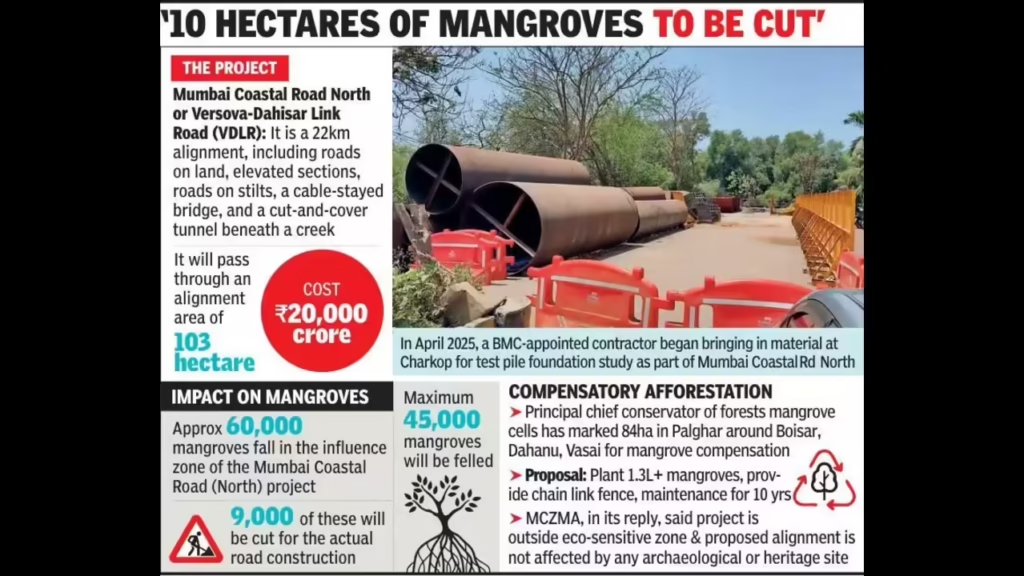
The project includes tunnels, bridges, and elevated roads constructed close to the Arabian Sea. While parts of the Coastal Road are already in use, civic authorities are now pushing forward with the northern extension. This extension is approximately twenty-six kilometres long and will continue the road further into Mumbai’s suburban areas.
Supporters see the project as essential for easing traffic pressure in a growing city. However, because the road runs along ecologically sensitive zones, Mumbai’s Coastal Road and mangroves have become deeply linked in public and environmental discussions.

Why Mangroves Matter to Mumbai
Mangroves are not just trees growing near the sea. They are coastal guardians that perform several critical functions for Mumbai.
They stabilise shorelines and reduce erosion by binding soil with their complex root systems. They act as natural barriers against storm surges, high tides, and floods. Mangroves support marine and bird life, providing breeding grounds for fish and shelter for migratory birds. They also capture and store carbon, helping fight climate change.
In Maharashtra, particularly around Thane Creek and Mahim Bay, mangroves form some of the most important coastal ecosystems. These forests have evolved over centuries as nature’s response to the sea’s forces and play a key role in maintaining Mumbai’s environmental balance.
When viewed through the lens of Mumbai’s Coastal Road and mangroves, their importance extends beyond ecology into public safety and urban resilience.

The Clash: Development vs Ecology
With the Coastal Road’s northern phase moving ahead, environmental concerns have taken center stage. The Bombay High Court recently granted permission to the Brihanmumbai Municipal Corporation (BMC) to proceed with clearing parts of the mangrove belt for construction, under strict conditions including compensatory planting and annual updates to the court. The Indian Express+1
Here’s what this means in practice:
Around 102 hectares of land — much of it mangrove habitat — will be affected to build the road. The Indian Express
Roughly 45,000 mangrove trees may be felled or relocated. The Indian Express
BMC has been asked to plant many more mangroves elsewhere, including in areas like Mira-Bhayander and even as far as Chandrapur and Palghar. The Indian Express
It’s worth noting that mangroves are incredibly complex ecosystems. Cutting and replanting do not fully replace decades of natural growth or the exact mix of species and wildlife that original patches support. Yet policymakers argue this is a way to balance development with environmental responsibility.
Voices from the Ground
Public reaction in Mumbai has been mixed. Many residents welcome smoother travel and reduced congestion. Online forums and discussions frequently highlight how the Coastal Road speeds up commutes and improves connectivity across the city.
At the same time, others express frustration. Some feel that too much natural habitat is being sacrificed for infrastructure that largely serves private vehicles. Environmental activists argue that the project benefits a relatively small section of the population while placing ecological risks on the broader public.
Online conversations reflect concerns about the loss of green cover and doubts about whether relocated mangroves can truly perform the same ecological functions as original forests.
There have also been calls from citizens to rethink how reclaimed open spaces along the Coastal Road are used. One petition urged authorities to transform sections into green lungs by planting native trees such as peepal, neem, and banyan, making better use of land created during construction.

Why This Matters for Everyday People
For Mumbaikars, the debate around Mumbai’s Coastal Road and mangroves goes far beyond policy documents.
Mangroves help reduce the impact of storms and high tides. With climate change increasing the frequency of extreme weather events, losing this natural defence could make the city more vulnerable to flooding.
Urban green spaces, whether mangrove belts or parks, play a crucial role in improving air and water quality. Their degradation affects public health and overall quality of life.
Mumbai’s shores and ecosystems are also part of what gives the city its character. Balancing growth with nature’s rhythms will determine how livable the city remains in the long run.
Mangroves, often overlooked, play an outsized role in keeping Mumbai resilient. As the city continues to grow, the conversation around Mumbai’s Coastal Road and mangroves will only become more important. Striking the right balance will require transparency, long-term planning, and a strong commitment to protecting what makes this coastal city unique.


